
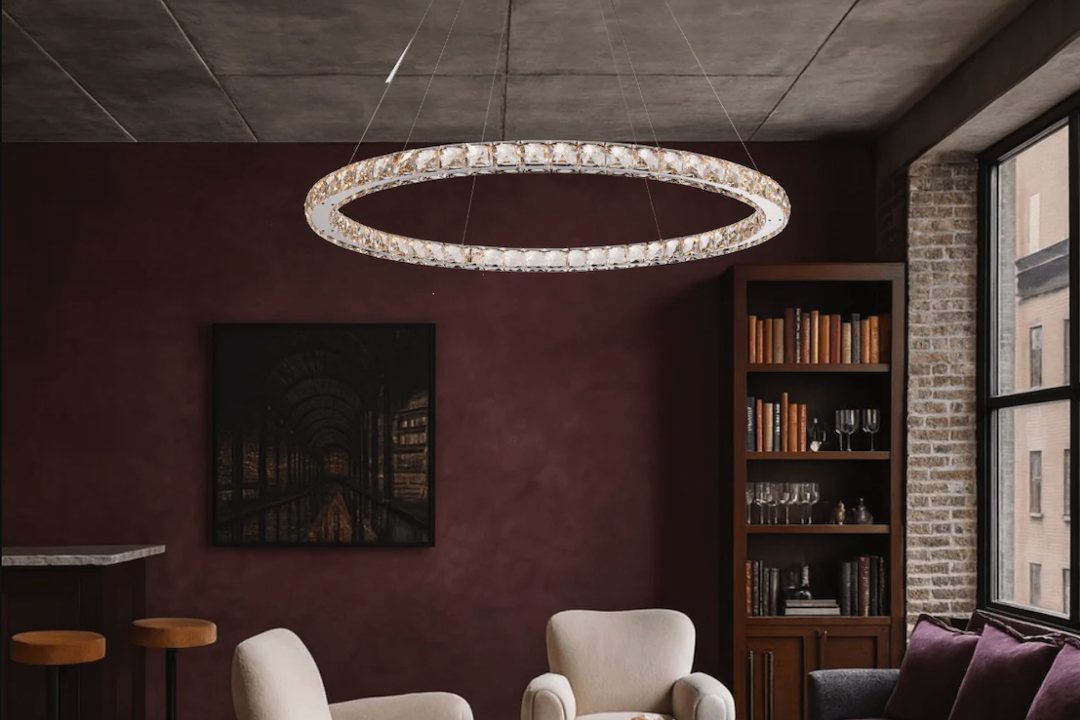
So, you’re thinking about a double-height foyer and wondering about the perfect centerpiece? A modern halo ring chandelier is a fantastic way to nail that “contemporary elegance” vibe. It’s a statement piece that does a lot of heavy lifting to define your grand entrance, making it feel both luxurious and up-to-date. Let’s break down why it works so well and what you need to consider.
A double-height foyer instantly sets a tone. It’s not just a passageway; it’s an experience. This vertical expanse is an opportunity to create a dramatic focal point.
Creating a Sense of Grandeur
The sheer volume of a double-height space naturally makes it feel grand. It’s an architectural feature that communicates openness and a certain level of sophistication from the moment someone steps inside.
Beyond Just “Big”
It’s about more than just having a large space. The upward sweep of the walls draws the eye, creating a sense of aspiration and inviting exploration. This scale is what makes it so impactful.
Defining the Entryway
This is your home’s first impression. A double-height foyer elevates this impression significantly. It’s not just about a door and a rug; it’s about the entire atmosphere.
The Welcoming Committee
Think of it as your home’s equivalent of a formal greeting. It’s designed to take your breath away, or at least make your guests feel genuinely welcomed into a special space.
Opportunities for Statement Pieces
The height provides an ideal canvas for larger, more impactful design elements. This is where you can really lean into statement furniture, art, or, of course, lighting.
The “Wow” Factor
When you’re designing a large, open space, you need elements that can command attention and fill that vertical space effectively. Without them, it can feel a little… empty.
Why a Halo Ring Chandelier Fits This Space
A halo ring chandelier isn’t just a light fixture; it’s a sculpted element that complements the verticality of a double-height foyer. It provides a modern, sophisticated focal point.
Contemporary Aesthetic
Halo rings, by their nature, are clean, geometric, and understated in their design complexity. This aligns perfectly with contemporary design principles that favor form, function, and a sense of calm.
Sleek and Uncluttered
Unlike traditional chandeliers 88off with many intricate details, a halo ring’s simplicity is its strength. It offers visual interest without overwhelming the space.
Scale and Proportion
The circular or oval form of a halo ring can surprisingly work well in a tall, rectangular space. Its generous diameter allows it to occupy the volume appropriately.
Bridging the Gap Between Floor and Ceiling
The key is hanging it at the right height. A well-placed halo chandelier can visually connect the floor to the soaring ceiling, preventing the space from feeling disconnected.
Illuminating the Volume
The design of many halo chandeliers is optimized for broad illumination, which is crucial for a large area like a double-height foyer.
Even Light Distribution
They often feature integrated LED strips or multiple points of light that cast a diffused, even glow, minimizing shadows and ensuring the entire space feels inviting.
Modern Yet Timeless Appeal
While undeniably modern, the basic form of a ring is quite classic. This gives halo chandeliers a surprising longevity in terms of style.
Not a Passing Fad
It’s the kind of fixture that complements a range of interior styles, from minimalist to mid-century modern, ensuring it won’t feel dated in a few years.
Key Considerations for Your Halo Ring Chandelier
Choosing the right halo chandelier for your double-height foyer involves more than just picking a pretty design. There are practical and aesthetic aspects to get right.
Size Matters (A Lot!)
This is perhaps the most critical factor. Too small, and it gets lost. Too large, and it can feel imposing or even unsafe.
Diameter and Height
- Diameter: You’ll want a chandelier with a significant diameter to appropriately fill the horizontal space of your foyer. A general rule of thumb for grand foyers is to aim for a diameter that’s roughly one-third to one-half the width of the room, or even larger for particularly expansive spaces.
- Height: The height of the fixture itself also plays a role, but more importantly, where it hangs.
Dropping Height and Ceiling Height Ratio
- General Guideline: A common recommendation for large spaces is to have the bottom of the chandelier hang about 7 feet from the floor if guests can walk underneath it. However, in double-height foyers, this measurement needs to be adjusted significantly upwards.
- Visual Balance: The goal is to hang it so it feels balanced with the height of the walls and doesn’t appear to be floating too high or too low. You want it to be a prominent feature but not so low that someone could easily bump into it if they were significantly taller than average.
- Staircase Proximity: If your foyer has a staircase, consider how the chandelier will look from different vantage points on the stairs. You want a pleasing view from both the entrance and as you ascend.
Using Visualizers or Mockups
- The Power of Imagination: Before buying, try to get a sense of scale. Some lighting stores or online retailers offer visualization tools. Alternatively, you can create a temporary mockup using balloons or large cardboard circles suspended at the intended height.
Material and Finish
The materials and finishes of your chandelier will dictate its overall aesthetic and how it integrates with your existing décor.
Metals: The Usual Suspects
- Brushed Brass/Gold: Offers warmth and a touch of luxury. It’s particularly effective in creating an inviting atmosphere and pairs well with natural materials like wood. It can lean more traditional or very contemporary depending on the finish.
- Black/Matte Black: Provides a bold, modern, and graphic statement. It’s excellent for grounding a space and works well with contrasting colors and textures.
- Polished Nickel/Chrome: Delivers a sleek, contemporary, and often more formal feel. It reflects light beautifully and adds a touch of sparkle.
- Bronze/Aged Brass: Can offer a more sophisticated, slightly antique, or industrial-chic vibe, depending on the specific patina.
Don’t Forget Other Elements
- Acrylic/Glass Accents: Some halo designs incorporate these materials for added visual interest or to diffuse light more softly. Consider how these reflect light and interact with the overall scheme.
Harmony with Your Home
- Coordinate: Think about the hardware in your home – door handles, cabinet pulls, furniture legs. Aim for a finish that complements these elements rather than clashing with them.
Light Source and Quality
The type of light and its quality are crucial for both ambiance and functionality.
Integrated LEDs vs. Bulbs
- Integrated LEDs: Many modern halo chandeliers feature built-in LED strips. These can offer a very streamlined look, often allowing for slimmer profiles and consistent light output. They are also energy-efficient and long-lasting.
- Pros: Sleek design, energy efficiency, long lifespan, often dimmable.
- Cons: If an LED fails, the entire fixture might need replacement rather than a simple bulb change.
- Bulb-Based Fixtures: Some designs still use standard bulbs (often halogen or LED equivalents).
- Pros: Easier to replace bulbs, flexibility in choosing bulb type (e.g., color temperature).
- Cons: Can sometimes lead to a slightly bulkier design to accommodate the sockets.
Color Temperature (Kelvin)
- Warm White (2700K-3000K): Creates a cozy, inviting atmosphere, ideal for living spaces. This is usually the preferred choice for residential foyers.
- Cool White (3500K-4000K): Offers a brighter, more energetic light, more akin to natural daylight. Can be good for task lighting but might feel too stark for a residential foyer.
- Daylight (5000K+): Very bright and blue-toned. Generally too harsh for a welcoming residential space.
Dimmability is Non-Negotiable
- Ambiance Control: A dimmer switch is essential for a foyer chandelier. It allows you to adjust the light to suit the time of day, the occasion, or your mood. You want bright light for security and visibility, but also softer light for a more intimate feel in the evenings.
Installation and Electrical Requirements
This isn’t a DIY project for most people, especially with a large fixture in a double-height space.
Professional Installation is Key
- Safety First: For a substantial fixture that hangs from a high ceiling, professional installation is crucial for safety and proper structural mounting.
- Weight Considerations: Ensure the ceiling box and any supporting joists can handle the weight of the chandelier.
Electrical Planning
- Circuit Load: Your electrician will ensure the circuit can handle the load of the chandelier, especially if it’s a large, powerful fixture.
- Dimmers: Have your electrician install the appropriate dimmer switch if it’s not already present.
Design Variations of Halo Ring Chandeliers
The term “halo ring” is broad, and manufacturers have developed many variations to suit different tastes and functional needs.
Single vs. Multi-Ring Designs
- Single Ring: The classic, a singular, clean circle or oval. This offers a minimalist and sophisticated look.
- Multi-Ring/Nested Rings: Two or more rings, often of different sizes or slightly offset, create a more dimensional and visually dynamic effect. This can add a bit more complexity while still maintaining a modern edge.
Creating Depth and Interest
Nested rings can make the fixture feel more substantial and add a layer of visual intrigue. Consider how the proportions of the rings work together.
Ring Thickness and Profile
The width and depth of the ring itself can change the overall impression.
Slim and Sleek
- Minimalist: A thin, almost wire-like ring offers extreme minimalism, appearing more like a floating illuminated circle.
- Subtle Presence: This option is for those who want the light and the form without a heavy visual impact from the fixture itself.
Wider and More Sculptural
- Statement Piece: A thicker or deeper ring can make the chandelier feel more like a sculptural element, a more substantial piece of art.
- Visual Weight: This can be beneficial in very large foyers where a slimmer profile might disappear.
Integrated Diffusers and Light Direction
How the light is emitted is a key part of the design.
Frosted Acrylic Diffusers
- Soft, Even Light: Many halo chandeliers use frosted acrylic or glass to create a soft, diffused glow. This prevents glare and ensures the light is spread evenly throughout the space.
- Uniform Illumination: This is excellent for creating a welcoming and comfortable ambiance.
Open Ring Designs
- More Accentuated Light: Some designs have exposed LED strips or a more open structure, which can create more direct or accent lighting.
- Modern Edge: This can contribute to a more industrial or avant-garde feel.
Color and Material Combinations
While metal is common, some designs combine materials.
Mixed Materials
- Unique Touches: You might find rings paired with subtle crystal accents, wood elements, or different colored metal finishes.
- Personalized Style: This allows for a more nuanced approach to design, blending different textures and tones.
Complementary Elements for Your Double-Height Foyer
A chandelier is often the star, but the surrounding elements are crucial for a cohesive and elegant look.
Staircase Design
The staircase is an integral part of a double-height foyer.
Railing Style
- Modern Spindles: Clean, geometric metal spindles or glass panels will enhance the contemporary feel.
- Wood or Wrought Iron: While beautiful, these might lean more traditional. Consider how they balance with the modern chandelier.
Materiality of Stairs
- Stone or Marble: Exudes luxury and works well with a range of chandelier styles.
- Wood Treads: Offers warmth and can be a beautiful contrast or complement to metal finishes in the chandelier.
Flooring
The floor sets the foundation for the entire space.
Large Format Tiles
- Sleek and Seamless: Large format porcelain or natural stone tiles create a sense of continuity and spaciousness.
- Marble or Limestone: For a classic yet elegant feel.
Hardwood Flooring
- Warmth and Sophistication: Wide plank hardwood floors can add warmth and a sense of natural elegance.
Wall Treatments
How you dress your walls can dramatically impact the mood.
Statement Wallpaper
- Geometric or Textured: A bold wallpaper on one or more walls can add personality and visual interest without overwhelming the space.
- Subtle Patterns: For a more understated approach, consider a textured wallpaper that adds depth and light reflection.
Large-Scale Art
- Focal Point: A single, large piece of abstract art can act as another significant focal point, balancing the grandeur of the chandelier.
- Color Palette: Choose art that complements or provides a pop of color against your wall treatments.
Other Lighting Fixtures
Don’t rely solely on the chandelier.
Wall Sconces
- Illuminating the Verticality: Strategically placed wall sconces can not only provide ambient light but also highlight architectural features like stair risers or textured walls.
- Layering Light: They add another layer of light, preventing dark corners and enhancing the overall mood.
Accent Lighting
- Highlighting Art: Spotlights can draw attention to artwork.
- Illuminating Plants or Features: Consider how to bring attention to other decorative elements.
Furniture and Accents
Though a foyer is often a transition space, thoughtful furniture choices elevate it.
Console Table
- Functional Display: A stylish console table under a statement mirror or artwork provides a surface for decorative items and keys.
- Material Match: Consider materials that complement your chandelier and other décor.
Area Rug
- Defining the Space: A well-chosen rug can anchor the entrance area, adding color, texture, and warmth.
- Size and Shape: Ensure it’s proportionate to the foyer layout.
The Future of Halo Ring Chandeliers in Contemporary Foyers
Halo ring chandeliers are more than just a trend; they’re evolving to meet new demands and aesthetic preferences.
Smart Home Integration
- Connected Living: Expect to see more halo chandeliers with built-in smart home capabilities. This could include app control, voice activation for dimming and color temperature adjustments, and integration with existing smart lighting systems.
- Convenience and Customization: Imagine adjusting your foyer light from your phone as you arrive home or setting specific lighting scenes for different times of day.
Sustainability and Eco-Consciousness
- Energy Efficiency: Already a strong point with LED technology, the focus will continue to be on highly energy-efficient designs and materials.
- Recyclable Materials: Manufacturers are increasingly exploring the use of sustainable and recyclable materials in their fixtures.
Customization and Bespoke Designs
- Tailored Solutions: As the demand for unique interiors grows, so too will the availability of custom or modular halo ring systems.
- Unique Forms: This could mean custom ring sizes, materials, or even configurations for truly one-of-a-kind installations.
Enhanced Light Quality and Features
- Tunable White Technology: Beyond just dimming, some advanced fixtures will offer tunable white technology, allowing the user to adjust the color temperature from warm to cool to mimic natural light or suit specific needs.
- Dynamic Lighting: The concept of dynamic lighting, where the light subtly shifts over time, might also find its way into residential applications, adding an almost living quality to the fixture.
The double-height foyer, with the right halo ring chandelier, offers a compelling blend of modern design and timeless elegance. It’s a space that should feel impressive, welcoming, and indicative of the style that awaits within the rest of your home. By carefully considering the size, materials, light quality, and complementary elements, you can create an entryway that truly makes a statement.