

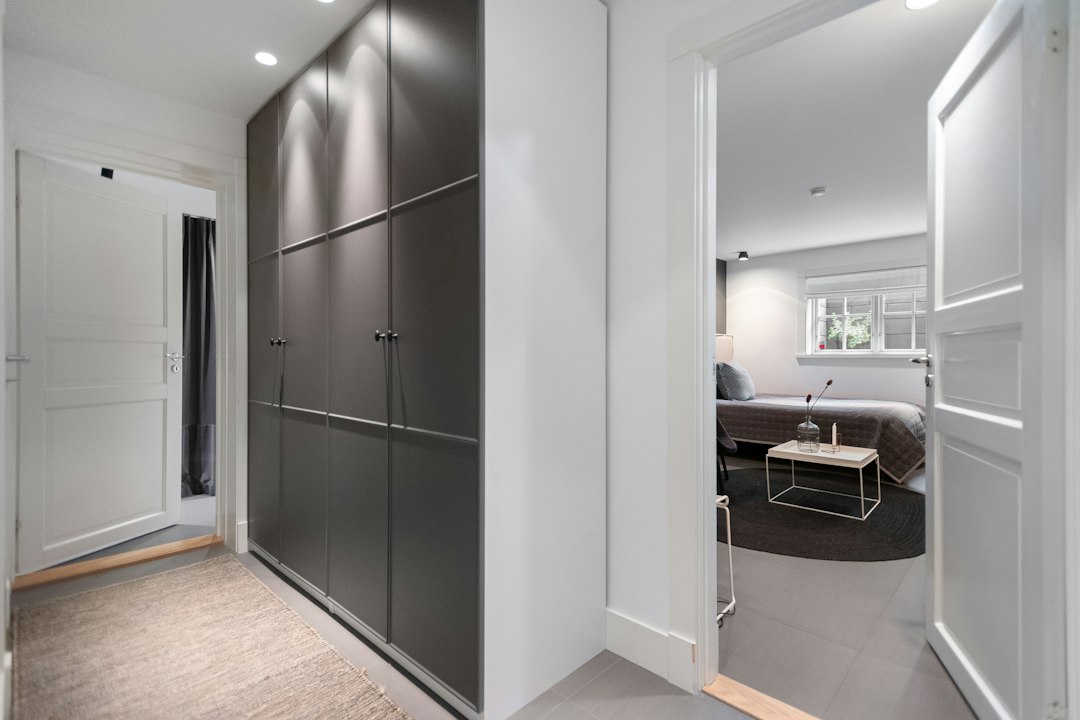
Beyond the Straight Line: Why Asymmetrical Track Lighting for Your Walk-In
You’re probably used to seeing track lighting as a neat, straight line – functional, but not exactly inspiring. For your walk-in closet, especially if you’re looking to elevate the decor beyond just a storage space, asymmetrical track lighting is a game-changer. It’s about moving away from the predictable and embracing a more dynamic, visually interesting approach that can highlight your best pieces, create focal points, and adapt to the unique layout of your closet. Think of it as painting with light, rather than just flooding a space. This isn’t just about aesthetics; it’s also incredibly practical for irregularly shaped closets or for showcasing specific areas that a traditional, symmetrical layout might miss.
Understanding Asymmetrical Track Lighting
Before we dive into the “how,” let’s clarify what asymmetrical track lighting actually means in this context. It’s not just about haphazardly throwing lights around. It refers to a deliberate, non-linear arrangement of track segments and light fixtures that breaks from a perfectly balanced, mirrored design. Instead of one long track down the center, you might have shorter, intersecting tracks, or tracks that run along different planes and angles. The goal is to create visual interest and functional illumination without adhering to strict symmetry.
Track Types and Their Flexibility
The foundation of any track lighting system is, well, the track itself. There are generally a few types, each offering different levels of flexibility for asymmetrical designs.
Monorail Systems for Curves and Bends
Monorail systems are fantastic for asymmetrical layouts because the track itself can be bent and shaped. This means you can create gentle curves, sharp angles, or even abstract patterns on your ceiling or walls. The track is usually made of a flexible, conductive metal that holds its shape once formed. This is particularly useful for closets with unusual architectural features or if you want to follow the outline of a custom-built island or shelving unit. Installation often involves standoffs that hold the track away from the surface, adding to its sculptural quality.
Traditional Track for Angular Designs
While traditional track (often H-type, J-type, or L-type) is typically rigid, you can still achieve asymmetrical designs by using multiple shorter segments and connectors. Instead of one long run, you might have two or three shorter tracks meeting at a 90-degree angle, or even branching off in different directions. This works well for creating “zones” within your closet, like highlighting a shoe wall on one side and a dressing mirror on another, with separate track segments for each. You’ll use various connectors (L-connectors, T-connectors, X-connectors) to link these segments, allowing for complex, non-linear paths.
Low Voltage vs. Line Voltage Considerations
Both monorail and traditional track systems come in low voltage and line voltage options. Low voltage systems often allow for smaller, more delicate fixtures, which can be appealing in a walk-in closet where space is at a premium and a refined aesthetic is desired. They also offer more dimming options and often come with a wider array of decorative heads. However, they require a transformer, which needs to be hidden. Line voltage systems are simpler to install as they connect directly to your household current, but their fixtures tend to be larger and less varied in design. For an asymmetrical setup, the smaller size of low-voltage fixtures can often contribute to a cleaner, less obtrusive look.
Fixture Heads: Directing the Light
The real magic of track lighting, especially in an asymmetrical setup, comes from the individual fixture heads. These are the elements that attach to the track and hold the light source.
Spotlights for Focused Illumination
Spotlights are your go-to for highlighting specific items or areas. In an asymmetrical design, you might use a cluster of spotlights to draw attention to a prized handbag collection on one shelf, or a single spot to illuminate a piece of artwork you keep in your closet. They emit a narrow beam of light, creating dramatic shadows and accentuating textures. The ability to individually aim each spotlight is crucial for achieving the desired effect in an asymmetrical layout.
Floodlights for Broader Coverage
Floodlights offer a wider beam spread than spotlights. While spotlights create drama, floodlights provide general task lighting. You might use a floodlight fixture to illuminate a clothing rack or a section of shelves where you need good, even light to see colors and details. In an asymmetrical setup, floodlights can be strategically placed to ensure no dark corners, even if the track itself isn’t running directly overhead.
Wall Washers for Soft, Even Light
Wall washers are designed to bathe a vertical surface in a smooth, even layer of light. These are excellent for showcasing a feature wall, such as a beautifully wallpapered section, or for making a small closet feel larger by illuminating an entire wall from top to bottom. In an asymmetrical design, a wall washer track head can be oriented to light up a specific wall that might not be directly under a main track segment.
Pendants for Decorative Flair
While less common than spots or floods, pendant track heads can add a decorative element to your walk-in closet. They hang down from the track and can be used to create a focal point over a dressing island or a vanity area. In an asymmetrical design, a pendant might be strategically placed to break up a long, straight run of track or to add a touch of elegance to a specific corner.
Strategic Placement for Impact
The beauty of asymmetrical track lighting lies in its flexibility to adapt to your closet’s unique features and your personal style. It’s about thoughtful placement, not just random arrangement.
Highlighting Key Features
Every walk-in closet has its stars – whether it’s a collection of designer shoes, a wall of bespoke suits, or a striking dressing table. Asymmetrical lighting allows you to treat these features like works of art.
Illuminating Clothing Racks and Shelving
Instead of just general overhead light, position track segments and fixtures to cast light directly onto your clothing racks. This helps you see colors accurately and makes it easier to select outfits. For shelves, consider aiming individual spotlights to highlight specific sections, like accessories or folded garments. With an asymmetrical setup, you can have a track running parallel to a long shelving unit on one wall, while a separate, shorter track illuminates a custom tie rack on an adjacent wall.
Showcasing Accessories and Collections
If you have a display case for jewelry, watches, or handbags, asymmetrical track lighting is ideal. A dedicated short track segment with a few focused spotlights can draw attention to these items, making them shine. You might have a curved monorail track that follows the contour of a glass display case, with each light carefully aimed.
Enhancing the Dressing Area
The dressing area, often featuring a mirror, benefits immensely from good lighting. Instead of a single overhead light creating harsh shadows, use track lighting on either side of the mirror or above it, with adjustable heads to provide even, flattering illumination. An asymmetrical approach might involve a track running vertically alongside the mirror on one side, and a horizontal segment above, ensuring balanced light for makeup application or outfit checks.
Addressing Irregular Closet Layouts
Not all walk-in closets are perfect squares or rectangles. Many have alcoves, angled walls, or specific architectural quirks. Asymmetrical track lighting thrives in these environments.
Navigating Awkward Corners and Nooks
If your closet has an L-shaped alcove or a recessed shelf, a straight track won’t cut it. Asymmetrical tracks can bend or connect at angles to follow these contours, ensuring every corner is well-lit. You can run a track into an alcove, illuminating what would otherwise be a dark, overlooked space.
Creating Visual Pathways
Beyond just lighting, an asymmetrical arrangement can guide the eye through your closet. A track segment might lead from the entrance towards a particularly attractive display, or loop around a central island, defining different zones within the space. This subtle visual guidance makes the closet feel more intuitive and organized.
Adapting to Custom Cabinetry and Built-Ins
Custom cabinetry often has varying depths and heights. Asymmetrical track lighting allows you to adapt your light sources to these differences. You might have a track segment running along the top of a shallow cabinet for general light, and then a separate, lower track segment with spotlights specifically for a deeper, illuminated display cabinet.
Design Principles for Asymmetrical Aesthetics
Achieving a successful asymmetrical look isn’t just about throwing lights up. It involves understanding a few key design principles to ensure it looks intentional and stylish.
Balance and Visual Weight
While asymmetrical means not perfectly mirrored, it doesn’t mean chaotic. You still need visual balance. This might mean having a longer track segment on one side balanced by a more substantial fixture or a cluster of lights on the opposite side. Consider the “visual weight” of your tracks and fixtures to create a sense of equilibrium, even without perfect symmetry. A heavier-looking fixture in one corner might be balanced by two lighter ones in another.
Contrast and Focus
Asymmetrical lighting is excellent for creating contrast. You can have areas of bright, focused light next to areas of softer, ambient illumination. This contrast helps to define spaces and draw attention to specific features. Use bright spotlights on your favorite garments and softer floodlights for general pathway lighting.
Repetition and Rhythm
Even in an asymmetrical layout, a certain rhythm can be created through repetition. This could be repeating a certain type of fixture head, or repeating the angle of track segments in different parts of the closet. This subtle repetition creates a sense of cohesion without being rigidly symmetrical. For example, if you use a series of short, angled track segments, repeating that angling in another part of the closet can tie the design together.
Layering Light for Depth
Don’t rely on a single type of light. Use a combination of accent lighting (spotlights), task lighting (floodlights for racks), and even some ambient lighting (wall washers or dimmer general lights) to create depth and interest. Asymmetrical placement makes layering easier, as you’re not restricted to a single overhead grid. This layered approach ensures that the closet is both functional and aesthetically pleasing.
Practical Considerations for Installation and Use
Beyond the design, there are some practical aspects to consider when planning your asymmetrical track lighting.
Power and Wiring
Unlike a simple central light fixture, asymmetrical track lighting often involves multiple points of power or longer runs. Ensure your existing wiring can support the load, and plan where the transformer (for low-voltage systems) will be located. It’s often best to consult an electrician for complex layouts to ensure safe and compliant installation. Consider if you want different track segments on separate switches to control different lighting zones.
Dimming Capabilities
Dimming is almost a necessity for walk-in closets. It allows you to adjust the ambiance – bright for getting ready, softer for a quick glance, or even a subtle glow for late-night access. Most track lighting systems are dimmable, but ensure your chosen fixtures and dimmer switch are compatible. This flexibility is particularly useful in an asymmetrical setup, where different areas might require different light levels at various times.
Light Temperature (Color Temperature)
The color temperature of your light bulbs will significantly impact the look and feel of your closet and the true colors of your clothes. For walk-in closets, a neutral white (around 3000K-4000K) is usually recommended. This provides a clean, accurate representation of colors without being too warm (yellowish) or too cool (bluish). Experiment with different temperatures in a small section if possible before committing to a whole system.
Future Flexibility and Adaptability
One of the great advantages of track lighting is its adaptability. Even with an asymmetrical design, you can easily reposition or add new fixtures if your closet layout changes or your needs evolve. This is a significant long-term benefit, making track lighting a smart investment for a space that might undergo transformations over time. The modular nature means you can swap out fixture heads, add more, or even extend track segments if you expand your closet.
Maintenance and Accessibility
Consider how easy it will be to change bulbs or clean fixtures, especially if they are placed at varying heights or angles. Ensure that all parts of your asymmetrical layout are reasonably accessible for routine maintenance without requiring a ladder for every single light bulb change. Choosing LED fixtures can reduce maintenance frequency significantly, as they have a much longer lifespan than traditional bulbs.
Conclusion: A Luminous Transformation
Asymmetrical track lighting is more than just a functional choice for your walk-in closet; it’s an opportunity to create a truly personalized, sophisticated, and highly functional space. By moving away from the conventional, you can illuminate your wardrobe with intention, highlight your favorite pieces, and adapt the lighting to the unique architecture of your closet. It adds a dynamic, sculptural element to the room and transforms it from a simple storage area into a curated display. With thoughtful planning and strategic placement, your walk-in closet can become a brilliantly lit, inspiring extension of your home’s decor, making getting dressed a more enjoyable and visually appealing experience every day.
