
Staircases, often seen as mere transitional spaces, can be transformed into design features through appropriate lighting. Modern LED wall lights provide a practical and aesthetically pleasing solution for illuminating staircases, enhancing both safety and visual appeal. This article examines the features, benefits, and design considerations of using LED wall lights for staircase illumination.
This article will proceed by exploring the fundamental advantages of LED technology, then delve into the specific applications of LED wall lights Nolowa for staircases. We will then discuss various design styles and installation considerations before touching upon smart technology integration and maintenance. Finally, we will review the lasting impact of well-chosen LED wall lights on the overall ambiance of a home.
Light Emitting Diodes (LEDs) have become a dominant force in the lighting industry due to a combination of technical and economic benefits. Unlike incandescent bulbs, which generate light by heating a filament, LEDs produce light through a semiconductor process. This fundamental difference underpins many of their advantages.
Energy Efficiency and Longevity
One of the most significant benefits of LED technology is its superior energy efficiency. LEDs consume considerably less electricity than traditional lighting sources for the same light output. For a homeowner, this translates directly into lower electricity bills. Consider the cumulative effect over the lifespan of the lighting fixtures, especially if staircases are illuminated for extended periods. This efficiency is not a fleeting advantage; it is a core characteristic of the technology itself.
Furthermore, the lifespan of LED bulbs is dramatically longer than their predecessors. While incandescent bulbs might last around 1,000 hours, LEDs can operate for 50,000 hours or more. This longevity means fewer replacements, reducing both ongoing costs and the inconvenience of frequent maintenance, particularly in locations that can be challenging to access. This extended lifespan is like a reliable sentinel, guarding your staircase with light for years to come.
Environmental Impact
The reduced energy consumption of LEDs also contributes to a lower carbon footprint. By using less electricity, households and businesses that opt for LED lighting are contributing to a reduction in greenhouse gas emissions associated with power generation. Moreover, LEDs do not contain hazardous materials such as mercury, which are often found in other lighting technologies like fluorescent bulbs. This makes them a more environmentally responsible choice throughout their lifecycle.
Durability and Robustness
LEDs are solid-state devices, meaning they have no filaments to break or glass bulbs to shatter. This inherent durability makes them resistant to vibrations and shocks, which can be an advantage in areas that might experience occasional impacts. This robustness contributes to their long operational life and reduces the likelihood of premature failure due to physical stress.
Versatility in Color Temperature and Brightness
LED technology offers an unparalleled range of color temperatures, allowing for precise control over the ambiance of a space. From warm, inviting tones that mimic candlelight to cool, crisp whites that lend a modern feel, there is an LED color temperature to suit any design aesthetic. Furthermore, the dimmability of many LED lights provides an additional layer of control, enabling users to adjust brightness levels to suit different times of day or specific needs. This adaptability is akin to a painter’s palette, allowing for nuanced atmospheric control.
Applications of LED Wall Lights for Staircase Illumination
LED wall lights are particularly well-suited for staircase illumination due to their directional light output, compact size, and the wide variety of designs available. Their placement on the wall offers a strategic way to light the treads and risers, enhancing safety and creating visual interest.
Task Lighting for Safety and Navigation
The primary function of staircase lighting is to ensure safe passage. LED wall lights, when strategically positioned, can cast light downwards onto each step, illuminating the treads and risers. This prevents missteps and allows for clear navigation, especially in low-light conditions or for individuals with visual impairments. The light acts as a guiding hand, each fixture a waypoint on the journey up or down.
Illuminating the Treads
Directing light onto the treads is crucial for clarity. Wall-mounted fixtures can be angled to provide even illumination across each step, minimizing shadows that can obscure edges. This creates a clear visual definition of each surface, reducing the risk of trips.
Highlighting Risers
While illuminating the treads is paramount for safety, highlighting the risers can add depth and visual appeal. Some LED wall lights are designed to cast a subtle glow upwards or downwards, subtly accentuating the vertical elements of the staircase. This can create a more dramatic or sophisticated effect.
Ambient and Accent Lighting to Enhance Aesthetics
Beyond their functional role, LED wall lights can significantly contribute to the overall aesthetic of a staircase and the surrounding architecture. They can transform a utilitarian space into a design statement.
Creating a Welcoming Atmosphere
Warm-toned LED wall lights can imbue a staircase with a sense of warmth and invitation. This is particularly effective in residential settings, where a welcoming ambiance is desired. The gentle glow can make the staircase feel like an integral and comfortable part of the home.
Showcasing Architectural Features
Staircases often possess interesting architectural details, such as handrails, balustrades, or unique tread materials. LED wall lights can be used as accent lighting to draw attention to these features, enhancing their visual prominence. This turns the staircase into a canvas, with light as the artist’s brush.
Defining the Space
In open-plan layouts, a well-lit staircase defined by elegant wall lights can act as a visual anchor, clearly demarcating the transition between different living areas. It can serve as a subtle, yet effective, design element that guides the eye and organizes the space.
Different Placement Strategies for Optimal Lighting
The effectiveness of LED wall lights on a staircase is heavily influenced by their placement. Various strategies can be employed to achieve desired lighting outcomes.
Low-Level Placement for Step Illumination
Mounting LED wall lights at a low level, typically just above the handrail height or even lower, allows for direct downward illumination of the treads. This is a highly effective method for ensuring safety and providing clear visibility of each step.
Sconce Placement
Traditional wall sconces, adapted for LED technology, can be mounted on the wall at intervals along the staircase. Their design often projects light downwards or in a specific direction, making them ideal for focused step illumination.
In-Wall Recessed Lighting
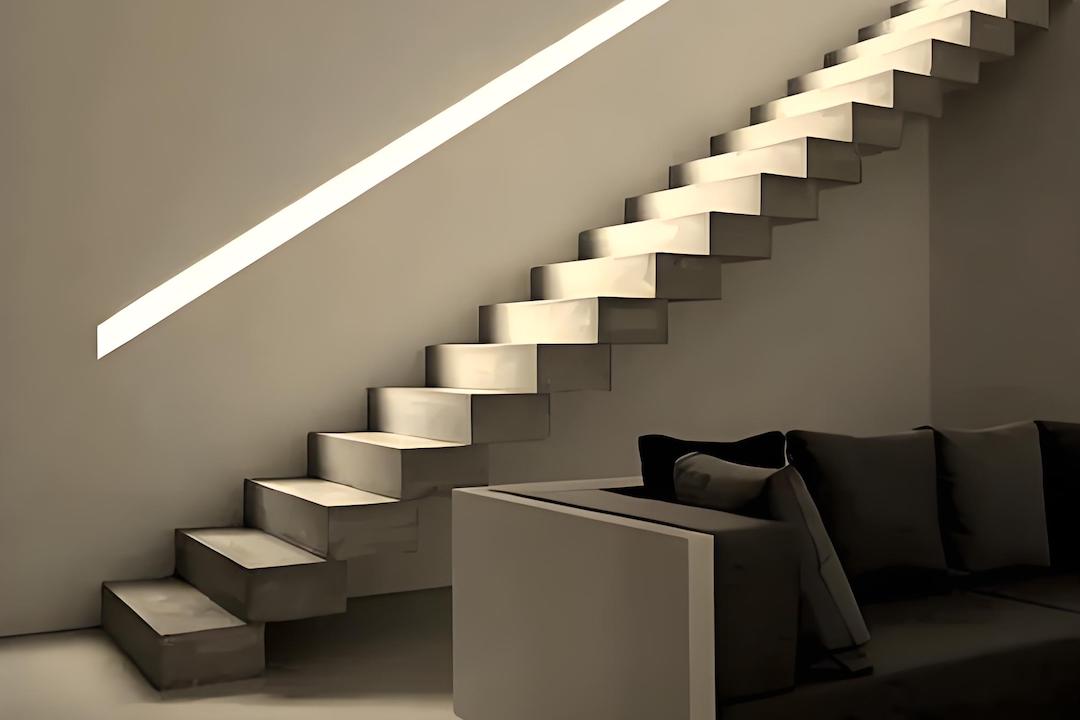
For a minimalist and seamless look, recessed LED wall lights can be integrated directly into the stairwell wall. These fixtures are flush with the surface, offering a discreet yet powerful lighting solution.
Mid-Level Placement for Ambient Glow
Positioning LED wall lights at a mid-level on the wall can create a more diffused and ambient lighting effect. This can be utilized to enhance the overall mood of the staircase and to provide a general illumination that complements task lighting.
Up-Lighting and Down-Lighting Fixtures
Wall lights designed to cast light both upwards and downwards can be mounted at mid-height to create a balanced illumination. The upward light can highlight the ceiling or upper wall, while the downward light can contribute to the overall brightness of the staircase.
High-Level Placement for Architectural Emphasis
Higher mounting positions are generally less effective for direct step illumination but can be used strategically to highlight architectural elements or to provide a broader ambient glow within the stairwell.
Considerations for Different Staircase Designs
The type of staircase significantly influences the choice and placement of LED wall lights. A modern minimalist staircase will likely benefit from different lighting solutions than a grand, traditional one.
Straight Staircases
Straight staircases offer a linear path and are relatively straightforward to light. Consistent spacing of wall lights at a suitable height can provide uniform illumination.
L-Shaped and U-Shaped Staircases
These staircases involve turns, which can create shadows. Careful placement of lights at the turns is crucial to ensure the entire path is well-lit. Consider using corner-specific fixtures or slightly increasing the density of lights around the bends.
Spiral Staircases
Spiral staircases present a unique challenge due to their curved nature. LED wall lights can be mounted along the outer wall, following the curve of the stairs. Accent lighting on the central column might also be considered to enhance the visual drama.
Design Styles and Material Choices for LED Wall Lights
The aesthetic of LED wall lights for staircases is as diverse as the lighting technology itself. From sleek, modern designs to more traditional interpretations, the options allow for integration with any interior design scheme. The materials used also play a role in both durability and visual appeal.
Contemporary and Minimalist Designs
For interiors aiming for a clean and uncluttered look, contemporary LED wall lights offer subtle yet effective illumination. These often feature geometric shapes, brushed metal finishes, or opaque diffusers that minimize visual clutter.
Linear Fixtures
Long, slender LED fixtures can be mounted horizontally or vertically along the wall, contributing to the architectural lines of the staircase. These can create a dramatic effect, drawing the eye along the ascent.
Recessed and Flush-Mount Options
As mentioned previously, recessed and flush-mount LED lights provide a seamless integration into the wall. These are ideal for minimalist aesthetics where the light source itself should be as unobtrusive as possible.
Frosted or Opal Glass Diffusers
These diffusers spread the light softening any harshness and creating a more uniform glow. They are a common feature in contemporary designs, contributing to a sophisticated ambiance.
Traditional and Transitional Styles
While LED technology is inherently modern, wall light designs are available that complement more traditional or transitional interior design palettes. These often incorporate classic shapes with updated LED components.
Sconces with Decorative Elements
Wall sconces with metal detailing, such as brass or antique bronze finishes, can offer a traditional aesthetic. The LED bulb within provides the energy efficiency, while the fixture design maintains a classic look.
Lantern-Style Fixtures
Some LED wall lights are designed to mimic the appearance of traditional lanterns. These can add a touch of charm and character to a staircase, particularly in older homes or those with a more rustic design.
Material Compositions and Finishes
The materials chosen for LED wall lights impact their durability, aesthetic, and cost. Common materials include metals, glass, and sometimes plastics.
Metal Finishes
Brushed nickel, polished chrome, matte black, and oil-rubbed bronze are popular metal finishes for LED wall lights. These finishes can range from highly reflective to subtly textured, catering to different design preferences. A matte finish, for instance, can absorb light and create a subtler presence, while a polished finish will reflect light and contribute to a brighter, more glamorous feel.
Glass and Acrylic
Clear, frosted, or textured glass is frequently used for diffusers or decorative elements. Acrylic can offer a more shatter-resistant alternative to glass, particularly in high-traffic areas. The type of glass or acrylic used will directly influence the quality and diffusion of the light emitted.
Ceramic and Natural Materials
In some niche applications, ceramic or natural materials like wood or stone are incorporated into LED wall light designs. These can offer a unique artisanal touch, adding texture and organic warmth to the lighting scheme.
Installation and Safety Considerations for LED Wall Lights
Proper installation of LED wall lights on staircases is paramount for both functionality and safety. It involves understanding electrical requirements, mounting techniques, and adherence to building codes. As with any electrical work, consulting professional electricians is often recommended.
Electrical Requirements and Wiring
LEDs themselves operate on low voltage, but they are typically powered by the mains voltage through a drivers or transformers. Understanding these power requirements is crucial for selecting the appropriate fixtures and ensuring safe wiring.
Voltage Compatibility
Ensure the chosen LED wall lights are compatible with your home’s electrical system. Most residential lighting operates on 120V or 240V, but the specific voltage requirements of the LED driver need to be considered.
Wiring and Circuitry
The wiring for LED wall lights must be installed in accordance with local electrical codes. This often involves running wires through walls or conduits, connecting them to power sources, and ensuring all connections are secure and insulated. If the staircase is new construction, this is often integrated into the building plans. For renovations, careful planning is required to minimize disruption.
Mounting Techniques and Structural Integrity
The method of mounting the wall lights will depend on the type of wall and the weight of the fixture. Ensuring a secure mount is essential to prevent the lights from falling.
Wall Material Considerations
Mounting on drywall, plaster, concrete, or wood will each require different appropriate fixings. Drywall, for example, often requires anchors or mounting directly into studs for heavier fixtures. Concrete walls may necessitate the use of masonry drills and plugs.
Securing Fixtures Firmly
The fixture should be firmly attached to the wall. This may involve using screws that pass through the fixture base into wall studs or using heavy-duty anchors designed for the specific wall material. A wobbly fixture is not only unsightly but also a potential safety hazard.
Building Codes and Compliance
Safety standards and building codes exist to ensure electrical installations are safe. Familiarizing yourself with these regulations or hiring a qualified electrician who is knowledgeable about them is advisable.
Local Electrical Codes
These codes dictate the proper methods for wiring, grounding, and protecting electrical circuits. They also specify requirements for the placement and type of lighting fixtures, particularly in areas like stairwells.
Accessibility and Maintenance
Consider how the lights will be accessed for future maintenance or replacement. While LEDs are long-lasting, there may be occasions when bulb replacement or fixture cleaning is necessary. Ensuring reasonable access will simplify these tasks.
Professional Installation vs. DIY
While some homeowners may possess the skills for DIY electrical installation, it is often recommended to engage a qualified electrician, especially for staircase lighting. This ensures the installation is safe, compliant with codes, and aesthetically pleasing.
Benefits of Professional Installation
An electrician can ensure the correct wiring, proper grounding, and secure mounting, minimizing the risk of electrical faults or accidents. They are also familiar with the latest building codes and best practices, providing peace of mind.
When DIY Might Be Considered
For very simple, low-voltage plug-in LED strip lights with self-adhesive backing, a DIY approach might be feasible for some. However, any hardwired installations should ideally be undertaken by a professional.
Smart Technology Integration and Advanced Features
The integration of smart technology with LED wall lights offers enhanced control, convenience, and energy management for staircase illumination. These features go beyond simple on-off functionality.
Dimmable LEDs for Mood Control
The ability to dim LED wall lights is a key feature for controlling ambiance. Dimmers allow users to adjust the brightness of the lights, from a bright illumination for safe passage to a soft glow for a relaxed evening.
Preset Lighting Scenes
Smart home systems can be programmed to create “scenes” for different times of day or activities. For example, a “night light” scene might dim the staircase lights to a very low setting, while a “welcoming guests” scene could bring them to full brightness.
Smooth Transitioning
Modern dimmers allow for smooth transitions in brightness, eliminating jarring changes in light levels. This creates a more sophisticated and comfortable lighting experience.
Motion and Occupancy Sensors
Integrating motion or occupancy sensors with LED wall lights can automate the lighting experience and improve energy efficiency.
Automatic Activation
As someone approaches the staircase, the motion sensor can trigger the lights to turn on. Once the area is no longer occupied, the lights can automatically dim or turn off after a set period. This is a practical solution for ensuring the staircase is always lit when needed and energy is not wasted. Imagine the lights as a silent, attentive guardian, illuminating your path only when you are present.
Energy Savings
By ensuring lights are only on when there is actual use, motion sensors contribute significantly to energy savings, especially in households with frequent comings and goings.
App-Controlled Lighting and Voice Commands
Smart LED wall lights can be controlled remotely via smartphone applications or through voice commands using smart assistants.
Remote Control and Scheduling
Homeowners can adjust brightness, color temperature, and set schedules for their staircase lights from anywhere using a smartphone app. This offers convenience and allows for the lights to be activated or deactivated remotely.
Voice Activation
Integrating with platforms like Amazon Alexa or Google Assistant allows for hands-free control of the staircase lighting. Simply issuing a voice command can turn lights on or off, adjust brightness, or change color settings.
Color Temperature Adjustment
Some advanced LED wall lights offer adjustable color temperatures, allowing users to switch between warm white and cool white light.
Adapting to Time of Day
A warmer color temperature can be used in the evening to promote relaxation, while a cooler, brighter color temperature can be beneficial during the day for visibility and alertness.
Customizing Ambiance
This feature allows for a highly personalized lighting experience, enabling users to tailor the mood of the staircase to their preferences.
Maintenance and Longevity of LED Wall Lights
While LED technology is known for its longevity, some basic maintenance can ensure optimal performance and extend the lifespan of your staircase wall lights.
Cleaning Fixtures and Lenses
Over time, dust and environmental pollutants can accumulate on the surface of LED wall lights, reducing their light output and affecting their appearance. Regular cleaning is a simple yet effective maintenance task.
Gentle Cleaning Solutions
Use a soft, damp cloth to wipe down the fixtures and lenses. For stubborn grime, a mild soap solution can be used, followed by a thorough rinse with a clean, damp cloth to remove any residue. Avoid abrasive cleaners or harsh chemicals, which could damage the finish or materials.
Avoiding Moisture Ingress
When cleaning, ensure that moisture does not seep into the electrical components of the fixture. Dry the fixtures thoroughly after cleaning.
Checking Connections and Drivers
Periodically, especially if you notice any flickering or inconsistent illumination, it may be beneficial to check the electrical connections and the LED driver.
Professional Inspection
If you are not comfortable with electrical components, it is best to have an electrician perform these checks. They can identify any loose connections or failing drivers that might be affecting the performance of the lights.
Signs of Driver Issues
A failing LED driver can manifest as flickering lights, dimming that is not controlled, or a complete lack of illumination. These are indicators that the driver may need to be replaced.
Replacing Individual LEDs or Whole Fixtures
Due to their long lifespan, replacing individual LEDs within a fixture is rarely necessary. However, if a specific fixture fails entirely, it will need to be replaced.
Integrated LED Fixtures
Many modern LED wall lights have integrated LEDs, meaning the entire unit is replaced if the LEDs fail. While this can be a cost consideration, it also simplifies replacement.
Repairability
Some higher-end fixtures may offer modular components that can be replaced, such as the driver or a specific LED module.
Environmental Factors Affecting Longevity
The lifespan of LED wall lights can be influenced by environmental factors such as extreme temperatures, humidity, and dust.
Indoor vs. Outdoor Use
Ensure that the LED wall lights chosen are rated for their intended environment. Lights designed for interior staircases may not be suitable for outdoor or high-humidity areas, which can accelerate degradation.
Ventilation
Adequate ventilation around LED fixtures can help dissipate heat, which is a common factor in the degradation of electronic components. Ensure that fixtures are not installed in enclosed spaces where heat can build up without proper air circulation.
The Lasting Impact of Well-Chosen LED Wall Lights on a Home
The selection and installation of appropriate LED wall lights for a staircase extend beyond mere functionality. They contribute significantly to the overall perception and experience of a home, acting as a subtle yet powerful design element.
Enhancing Property Value and Appeal
A thoughtfully illuminated staircase can enhance a property’s curb appeal and interior aesthetics, potentially increasing its market value. It signals attention to detail and sophisticated design choices, which are appealing to potential buyers. The staircase, through its lighting, transitions from a simple means of vertical circulation to an integral part of the home’s narrative.
Creating a Sense of Welcome and Sophistication
The initial impression of a home often begins at its entrance and extends to its interior. A well-lit staircase can create a welcoming and sophisticated atmosphere from the moment guests arrive. The light becomes a silent ambassador, conveying a sense of warmth and refined taste.
Improving Home Safety and Accessibility
Beyond aesthetics, the primary benefit of proper staircase lighting is improved safety. Clearly illuminated steps reduce the risk of accidents for all occupants, from children to the elderly. This practical consideration contributes to a more secure and accessible living environment.
Personalizing Interior Design
LED wall lights offer a canvas for personalization. The ability to select different styles, colors, and control features allows homeowners to imbue their staircase with their individual design sensibilities. It is an opportunity to imprint your unique character onto a functional space.
Long-Term Cost Savings
The energy efficiency and longevity of LED technology translate into significant long-term cost savings on electricity bills and replacement bulbs. This makes them a financially prudent choice for homeowners seeking both aesthetic appeal and economic benefit.
In conclusion, modern LED wall lights offer a versatile and advantageous solution for illuminating staircases. Their energy efficiency, longevity, and adaptability in terms of design and features empower homeowners to transform a functional architectural element into a focal point of both safety and style. The careful consideration of design, installation, and integration with smart technology ensures that these lighting solutions provide lasting benefits for both the aesthetic and practical aspects of a home.